



Our future is largely shaped by technology, and it goes beyond just utilizing a smartphone or tablet. The tech world has had a tremendous impact on how we live, even before we recognize how important the event is.
Every organization in the world right now is counting on data to make the right business plans and decisions. It would have been hard to imagine the world if there was no data. Most electronic devices are using IoT for data collection, be it smart cars or wearable tech, and we are surrounded by them. IoT innovations have exploded in recent years, affecting everything from how we control the temperature in our homes to how we measure our daily steps and calorie intake with fitness trackers. We are surrounded by devices, and IoT and big data promise to connect them so that our lives will be better.
We can also look towards the FinTech sector, which can instantly identify fraudulent conduct, inform the user, and halt the transaction by using big data and developing algorithms that recognize client behaviors. Additionally, technology can improve the accuracy of fraud detection and prevent the arbitrary blocking of client accounts, leading to higher consumer happiness.
“Many producers and enterprises in the industrial sector can use robotics, AI, deep technology, ML, and computer vision to influence every aspect of production and operational processes. This helps organizations in bringing down the production cost of goods and services,” said Rajat Khare, founder of Boundary Holding, a Luxembourg-based venture capitalist firm.
By 2026, research and market estimates estimate that the global market for IoT big data solutions will be close to $51 billion. The need for reliable and adaptable systems, cutting-edge analytical tools, and scalable data storage will only increase as technology develops. The financial, telecom, retail, healthcare, and transportation sectors will be the market’s driving drivers.
Future manufacturing platforms will be able to combine, aggregate, and analyze data using a federated model. Robots and autonomous systems can stop pushing data to the cloud for analysis by deploying AI and ML models at the edge.
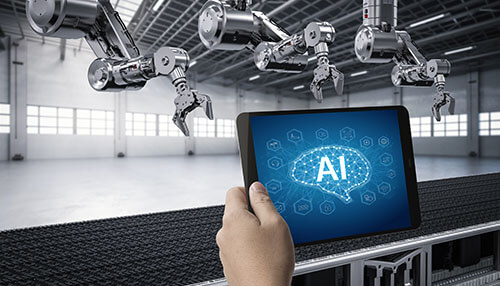
The results can then be sent back to the cloud by the systems for model updating and training. The autonomous systems and robots in the field or on the manufacturing floor can then receive updates from the cloud application.
AI has the potential to improve society if used properly, but like with most newly developed technologies, there is a genuine danger that its usage by businesses and governments may have a negative effect on human rights.
Every technology has room for development and expansion. We can’t yet claim to have made every technical progress; instead, technology is allowing us to evolve at an ever-increasing rate. The best thing about the current position is that as we learn more about technology, we tend to acquire a greater understanding of it.
From using nanosatellites for IoT device communication to AI & ML supporting deep tech and big data, everything is interconnected in a way that is benefiting humanity. This cross-functional approach will define the future of data and AI use across sectors. AI has the potential to significantly impact sustainability, climate change, and environmental challenges on a far larger scale. Ideally, cities will become less congested, less polluted, and generally more livable, in part thanks to the deployment of advanced sensors.
